Mandy CHANG: Global Opportunities for Documentary Filmmakers
(Keynote Presentation on CCDF-16)
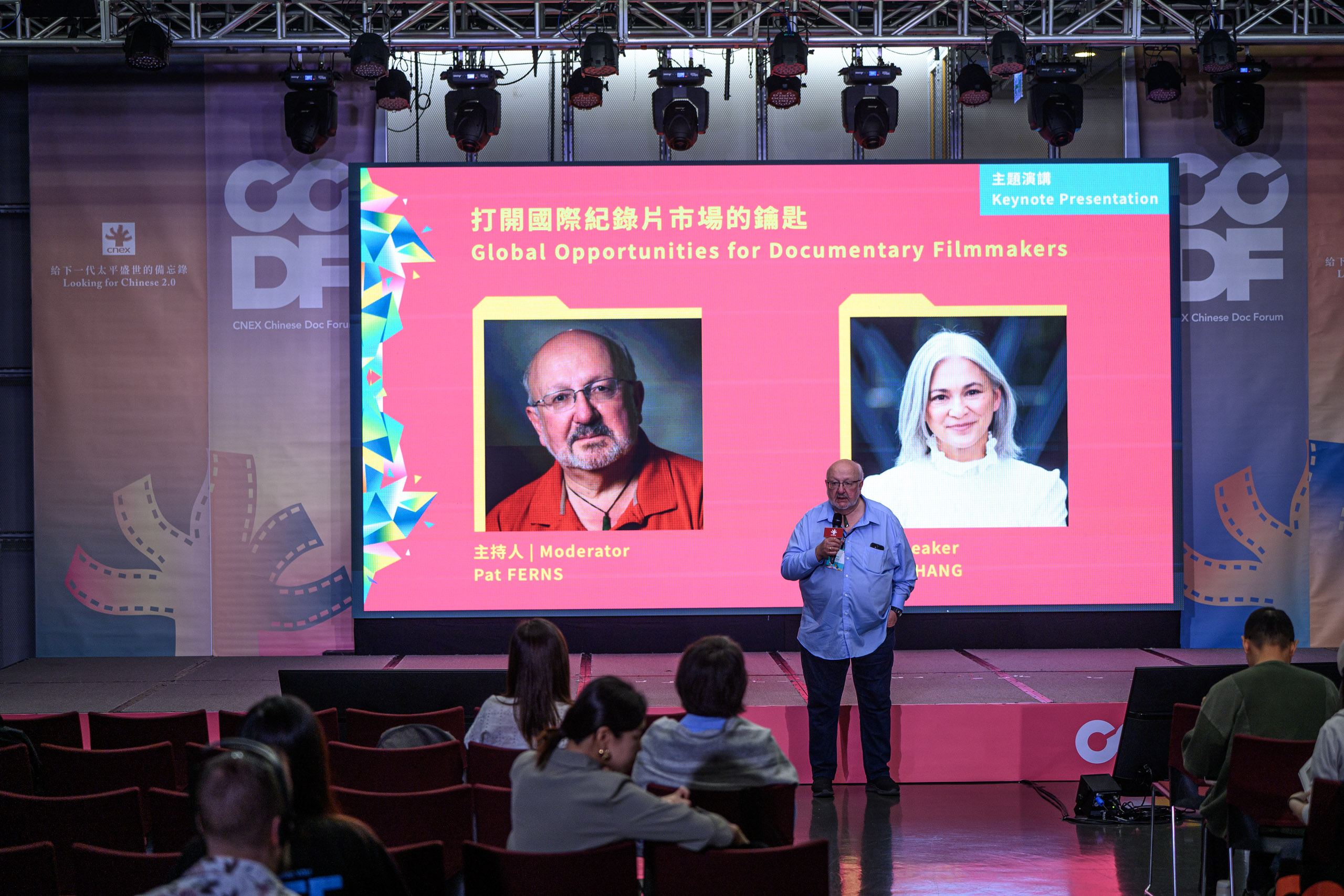
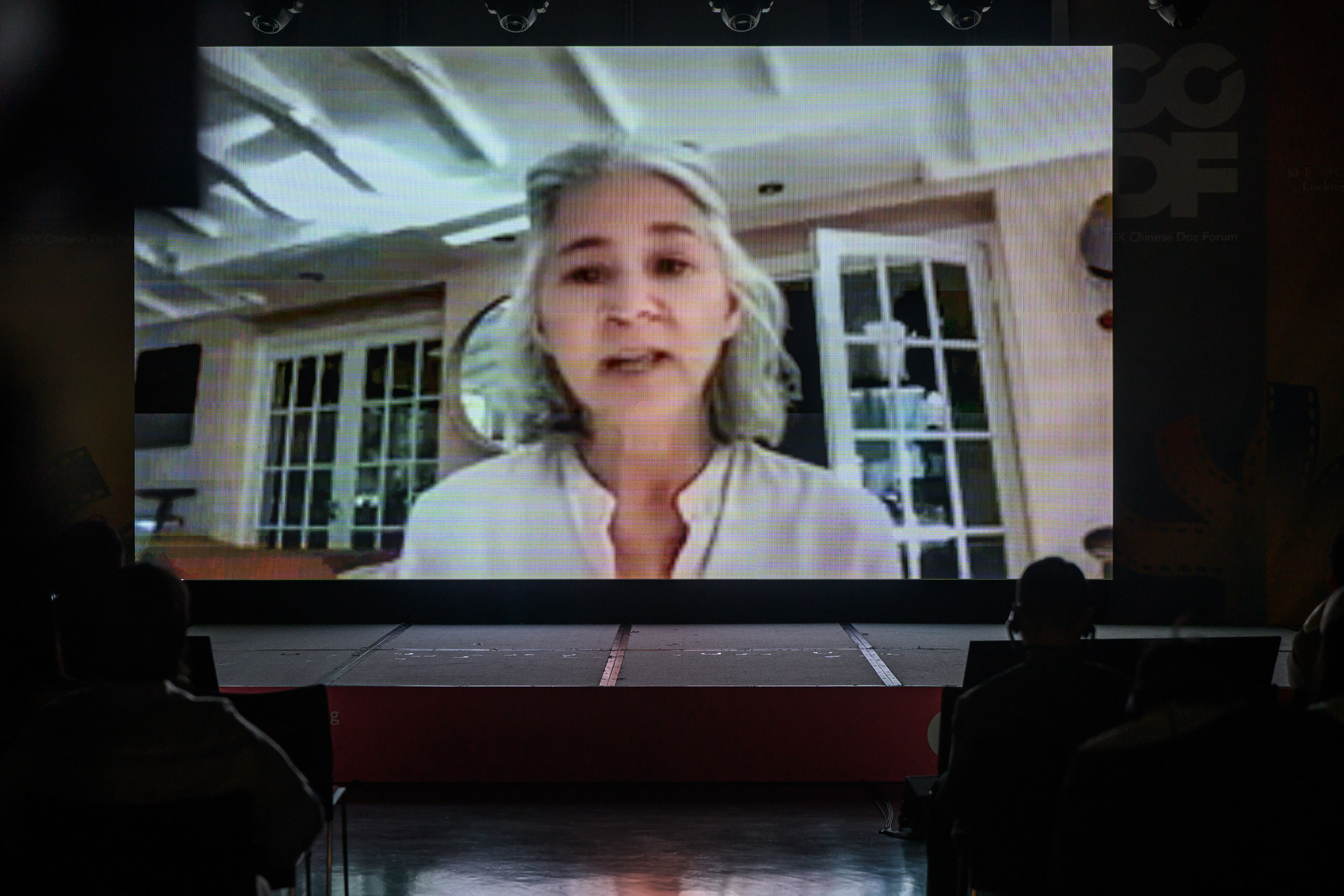
At a moment when the global documentary industry is undergoing profound disruption, esteemed executive producer and commissioner Mandy Chang addressed CCDF attendees via a pre-recorded video, offering a strikingly candid and panoramic view of the challenges and emerging possibilities facing filmmakers today. Although she could not be present in person, Mandy began by thanking the organizers and expressing her enthusiasm for engaging more closely with Asian filmmakers. Having spent decades on both the commissioning and filmmaking sides, she aimed to help participants better understand the rapidly shifting realities of funding, production, distribution, and audience behavior. “There’s no right or wrong way to make a film,” she said. “But knowing the market helps you understand how to navigate your own path.”

Mandy began by acknowledging what many in the room already sensed: the documentary market is narrowing, and narrowing almost inevitably leads to a loss of diversity. Online platforms—once expected to revolutionize nonfiction storytelling—have settled mainly into predictable patterns. Most now prioritize what she calls “The Three Cs”: crime, celebrity, and cults. The risk tolerance for political, geopolitical, and non-English-language films has dropped sharply. Streamers in particular avoid projects that might offend governments in regions where they operate—or hope to operate. Even content about Russia is often avoided, even though many platforms no longer do business there. Meanwhile, traditional broadcasters face their own pressures, from political attacks to shrinking public funding. In the United States, for example, the erosion of support for public media during the Trump administration left deep marks on the ecosystem for international documentaries.
This contraction follows an inflated period when new funders poured money into documentaries, driving prices up and creating unrealistic expectations. Many of those funders have since disappeared. The number of filmmakers, however, has continued to grow, producing an environment where competition for limited opportunities is fiercer than ever. At the same time, film festivals continue to program vast numbers of documentaries, further underscoring the imbalance. She mentioned attending CPH:DOX, where more than 250 films screened; only a tiny fraction of them ultimately secure distribution. “A theatrical release is extremely rare,” she noted. “If you get one, it means your film is truly distinctive.”
To illustrate where opportunities still exist, Mandy shared examples of films that have managed to break through despite the challenging landscape. She began with Mistress Dispeller, an observational documentary shot in China by Elizabeth Lo. The film follows a woman whose profession is to break up extramarital affairs. Mandy praised its extraordinary access and its ability to balance intimate character study with broader social insight. The project attracted support from organizations such as Anonymous Content and Impact Partners, and later secured North American rights with Oscilloscope after premiering at major festivals.
Mandy noted that two of the most successful recent Chinese documentaries center on relationships and love—universal themes expressed through the specificities of Chinese cultural context, which international audiences find inherently compelling.
She then referenced Violet Feng’s The Dating Game, a film that weaves a personal perspective with a broader social theme. Mandy encouraged Asian filmmakers to tap into the extensive network of Asian-American directors, editors, producers, and cinematographers working in the United States—many of whom possess deep knowledge of the global market. “If you can convince them your film is worth their attention,” she said, “they can teach you a great deal.”
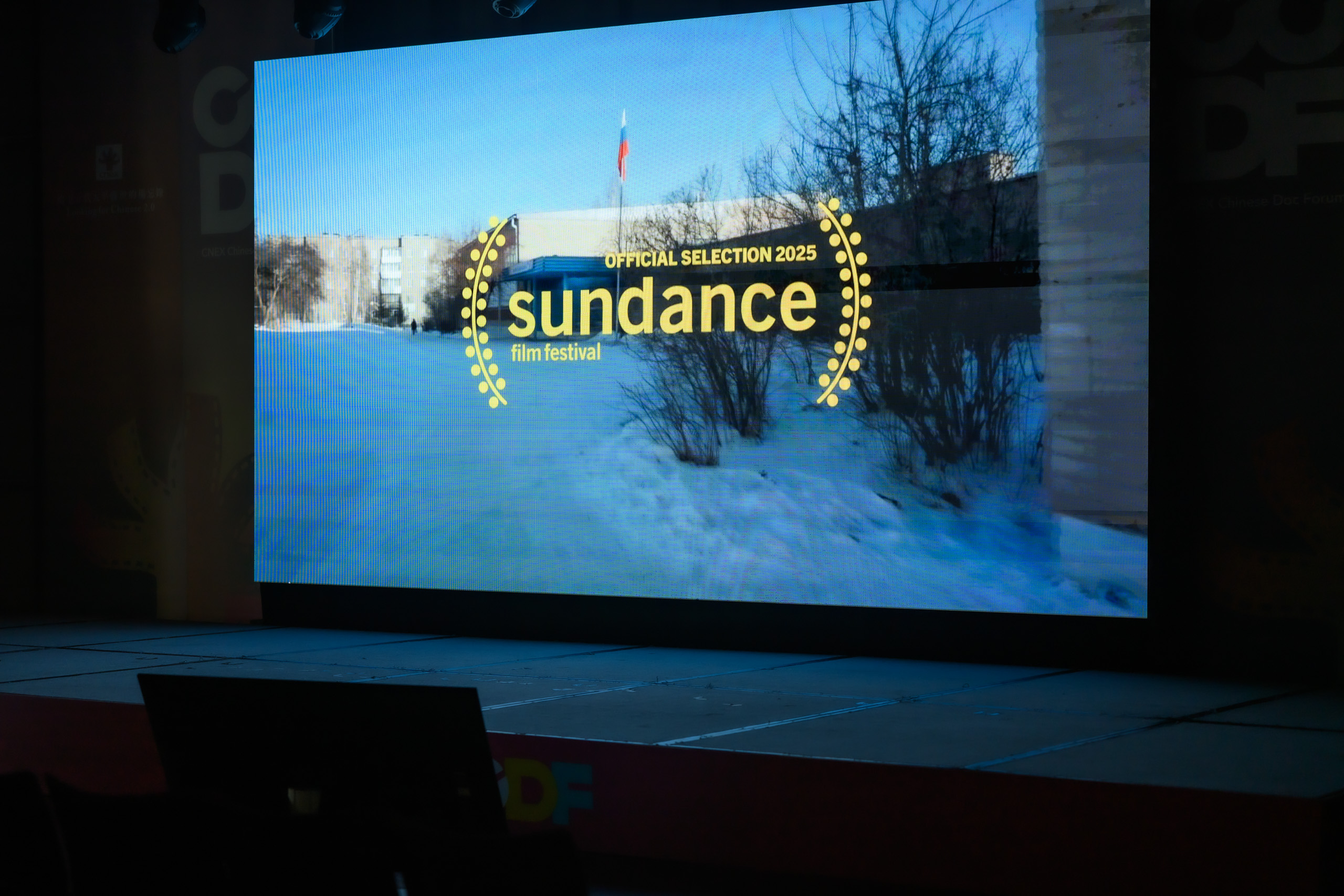
Another standout example was Mr. Nobody against Putin, a Danish–U.K. co-production about Russia that blends political insight with humor and is driven by a magnetic central character. Despite widespread reluctance among streamers to handle political content, the film was acquired early by public broadcasters and later screened at Sundance. It is now running for the Academy Award campaign. The project underscores the value of co-production models, which enable films to access government funding and editorial expertise beyond their home countries. Mandy emphasized the filmmakers’ duty of care, noting the risks of shooting in Russia and the necessity of having experienced producers to safeguard the protagonist throughout the process.
She then turned to The Stringer, which uncovers the true story behind a famous war photograph long credited to an American photographer—but in reality taken by his Vietnamese stringer. Supported by Media and the VII Foundation, the film was ultimately acquired by Netflix. For Mandy, the project is a powerful reminder that Asian filmmakers are increasingly reclaiming narratives that have historically been overshadowed by Western accounts. Such stories, she noted, have the potential to resonate both across Asia and with audiences worldwide.
Despite the challenging market, Mandy sees reasons for optimism. She cited 20 Days in Mariupol, which went on to win an Academy Award despite lacking mainstream distribution. The filmmakers took the film on a self-organized tour across the United States, ultimately achieving significant global visibility. This example, she argued, demonstrates that filmmakers who retain control over their distribution pathways can sometimes reach audiences that formal industry structures fail to capture. Emerging experimental platforms and community-based distribution initiatives may also offer new avenues forward, though it remains too early to predict how they will develop.
What has not changed, she insisted, is the enduring power of strong storytelling. “A good story, well told, will always find its audience.” She encouraged filmmakers to apply for major labs and grants—including IDFA’s Bertha Fund, Sundance’s funds, and organizations such as Chicken & Egg, Catalyst, the Ford Foundation, and ARTE. Many of these programs provide not only financial support but also mentorship, editorial guidance, and long-term creative relationships. One of her current projects recently received a $100,000 Sundance grant, enabling the team to enter the editing phase far earlier than expected—a reminder of just how transformative early-stage support can be.

Mandy emphasized that public service broadcasters remain central to the global documentary ecosystem. Although some have faced political and financial pressures, European broadcasters—in Denmark, Germany, France, and elsewhere—continue to commission and acquire international stories. Their contributions vary widely: Denmark’s DR might offer €10,000, while ARTE can provide up to €150,000. When combined through co-production, these smaller amounts can form the backbone of a production budget.
Co-production also opens access to government funds in each partner country, but securing them requires collaboration with experienced producers who understand local systems. Mandy noted that of the thirteen feature documentaries she is currently producing or executive producing, seven are full co-productions involving teams across multiple continents.
She returned to the fundamentals of strong filmmaking: a clear narrative arc, a compelling protagonist, a distinct style and tone, meaningful context, confident storytelling, and ethical access. Filmmakers, she noted, must stay informed by watching award-winning films, tracking programming trends, and paying attention to subjects that resonate internationally. Recent acclaimed Asian works—Wang Bing’s Youth trilogy, An Unfinished Film at Cannes, and People’s Republic of Desire—show that global appetite for authentic Asian stories remains strong.
Commissioners, she added, will inevitably ask questions such as: Who is the audience? Why make this film now? Why does this story matter? And what will viewers actually see on screen? Universal themes—like the relationship-centered narratives in Mistress Dispeller and The Dating Game—continue to travel well because audiences everywhere can recognize and relate to them.
Mandy concluded by praising the generosity of the documentary community. Filmmakers, she said, are naturally curious, collaborative, and eager to share what they know. She encouraged participants to make the most of CCDF—meet decision makers, seek advice, find partners, watch pitches, and build lasting relationships. “I hope you take away a few pearls from this talk,” she said. “I wish each of you success on your filmmaking journeys. Take full advantage of the remarkable opportunity here to learn, connect, and grow.”
The session closed with moderator Pat reflecting on his own fifty-year career and echoing Mandy’s emphasis on public broadcasters as the backbone of serious documentary work. He noted that while the digital revolution has made filmmaking cheaper, it has also accelerated distribution consolidation, with streamers narrowing their focus. Pat then asked Mandy why a commission still matters. She explained that a commissioning editor is not merely a funder, but a creative partner who accompanies the filmmaker throughout the entire process—providing legal support, editorial guidance, and sometimes even additional resources when needed. Their involvement also lends credibility, helps attract other partners, and prevents filmmakers from being pulled in different directions by conflicting notes.
With that, the forum wrapped up—leaving attendees with a realistic but hopeful roadmap for navigating a rapidly changing documentary world, and a reminder that great storytelling, grounded in authenticity and craft, remains the most powerful force filmmakers have.