Survival Strategies: Lessons from the Frontlines (Summary of the panel of CCDF-16)
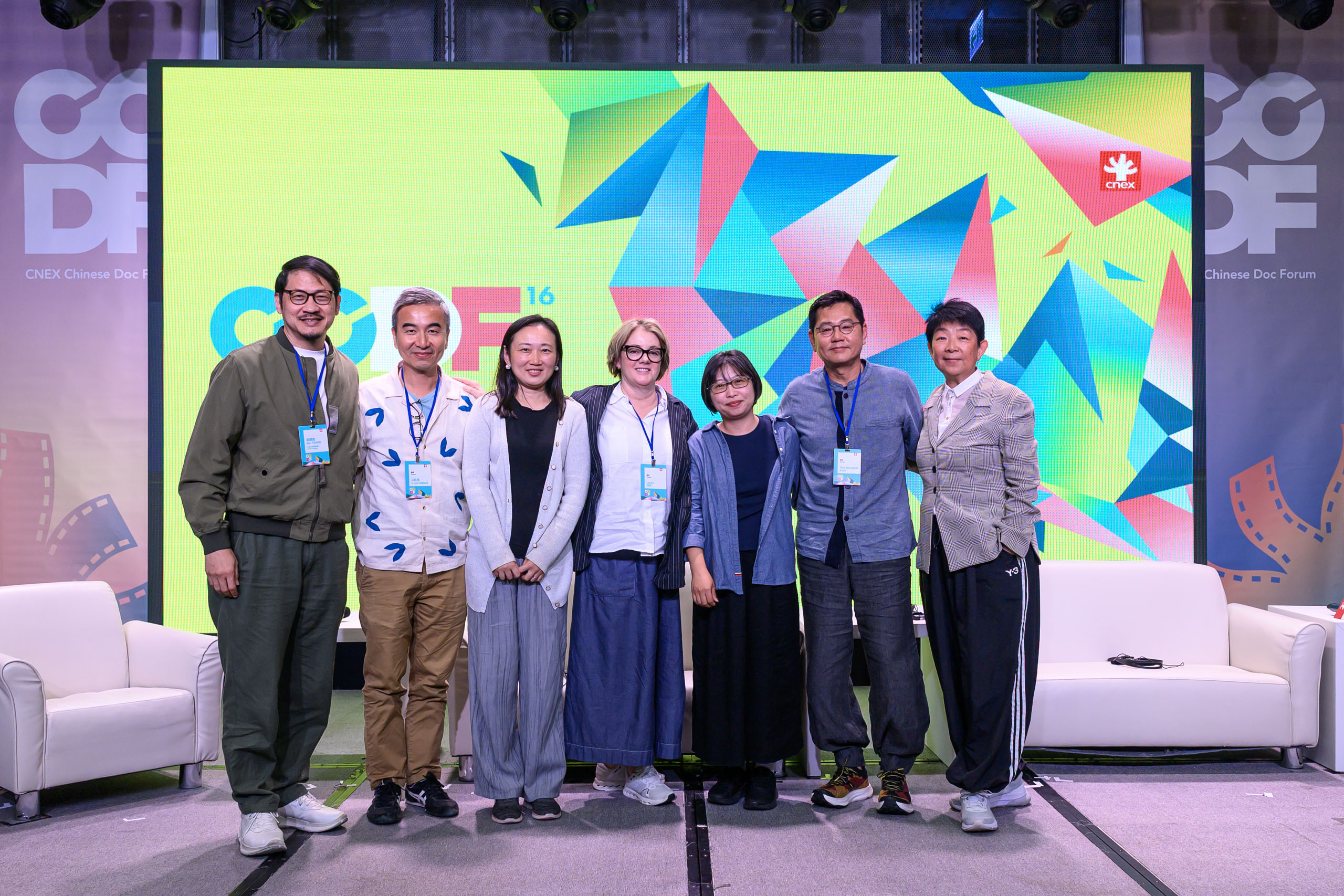
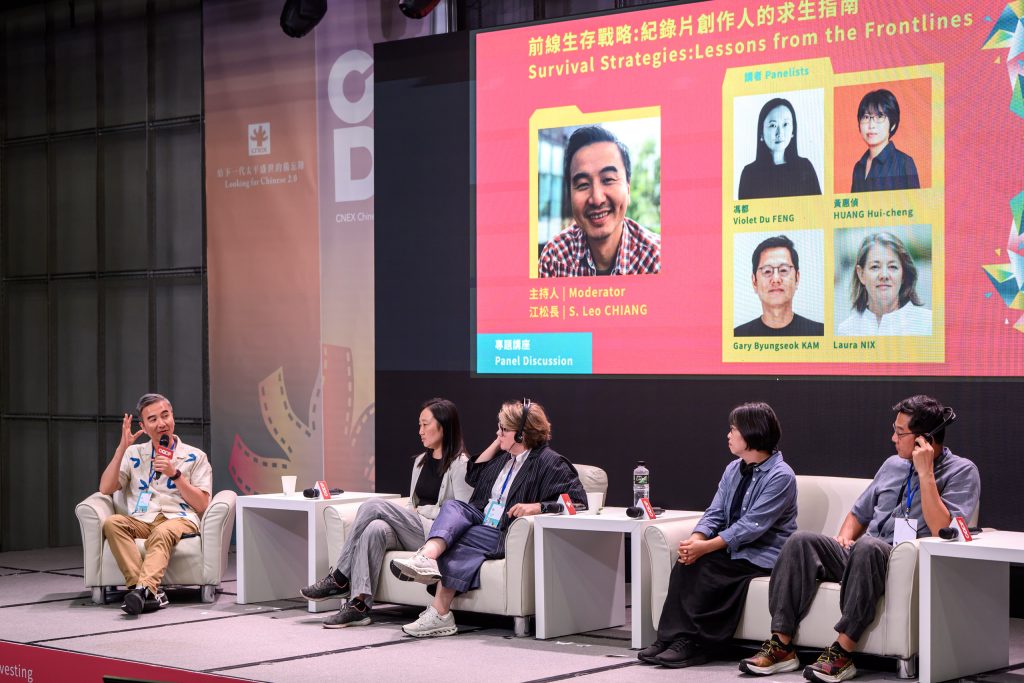
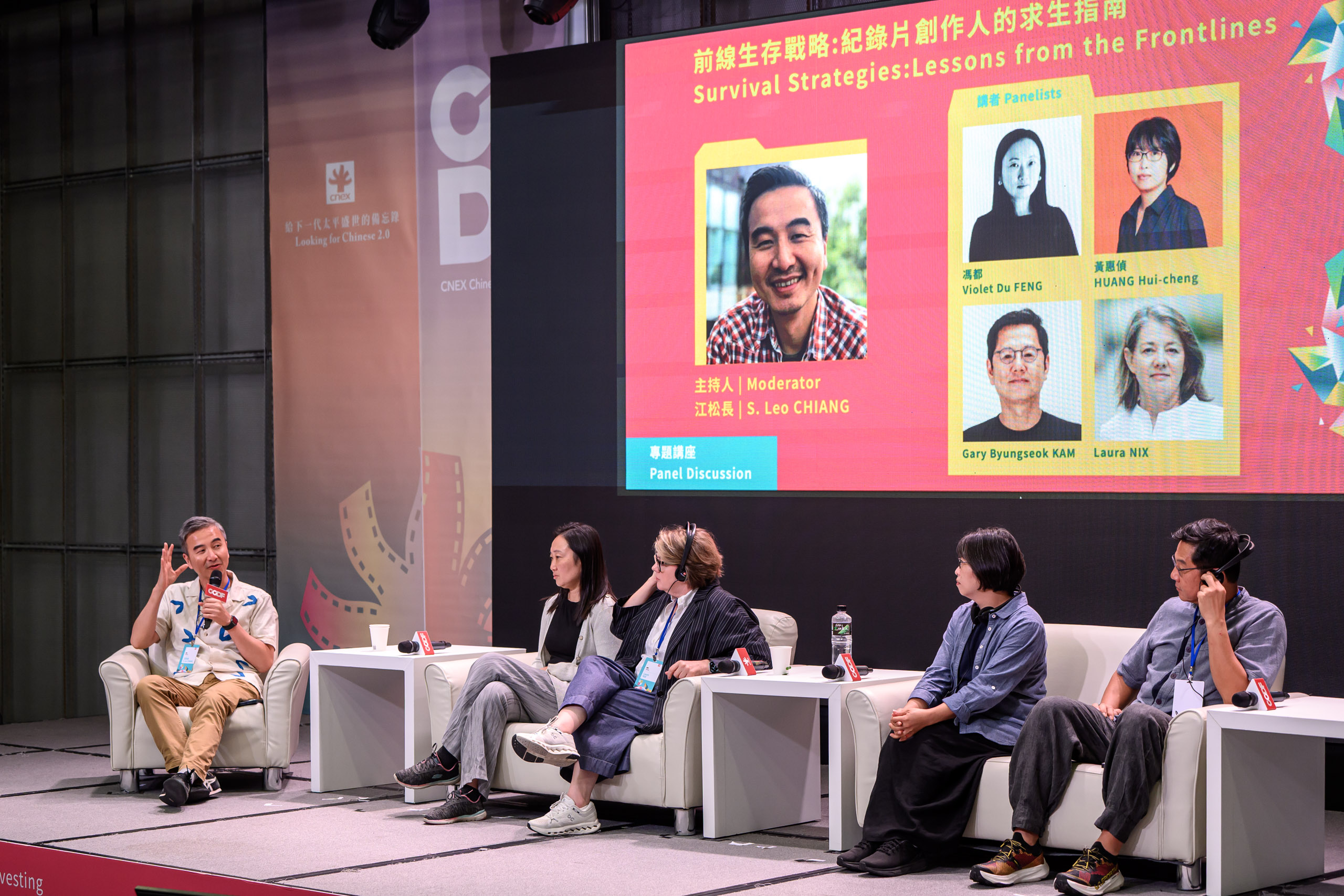
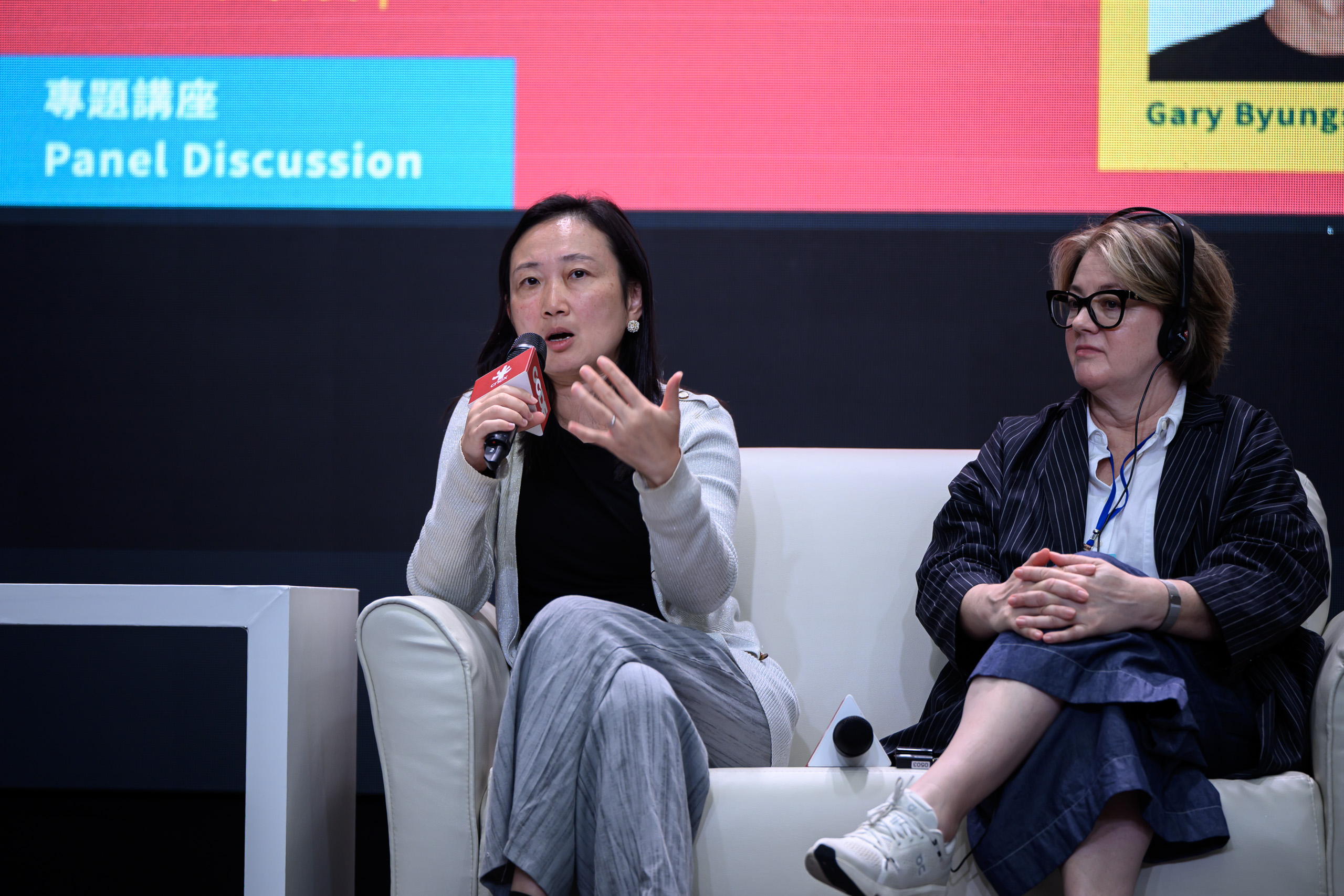
This panel, moderated by filmmaker S. Leo Chiang, brought together four documentary directors and producers with extensive international experience, Violet Du Feng, Gary Kam, Huang Hui-cheng, and Laura Nix, to examine the current turbulence facing the global documentary industry from perspectives rooted in the United States, Asia, and Taiwan.
Over the past decade, shrinking public funding, shifting strategies among streaming platforms, rising political sensitivity, and increasingly fragmented viewing habits have fundamentally reshaped how documentaries are produced, financed, distributed, and sustained. Drawing on their own experiences of adaptation, failure, and breakthrough, the four speakers reflected on how filmmakers are responding to crisis, and what directions and strategies may define the next phase of documentary practice.

The U.S. Perspective: Structural Shifts in the Documentary Ecosystem
The discussion opened with Laura Nix, who traced major structural changes in the U.S. documentary landscape based on more than three decades of professional experience. She argued that these shifts have deeply affected whether filmmakers can continue producing work that engages with public issues and critical discourse.
1. The Collapse of Public Funding and Public Media
Nix noted that the United States once maintained a relatively robust system of public funding and public media, including institutions such as the National Endowment for the Humanities (NEH) and the Public Broadcasting Service (PBS), which long supported documentaries addressing public value, political issues, and social critique.
In recent years, however, political shifts have led to significant cuts to public broadcasting budgets and arts funding, including cases where grants that had already been approved were later withdrawn. For many filmmakers, years of development and production investment were suddenly rendered unrecoverable.
She emphasized that this crisis extends beyond funding alone. It signals the rapid dismantling of institutional platforms that historically sustained public debate, political engagement, and social justice narratives. For many creators today, there are increasingly few spaces in the U.S. where politically engaged documentaries can be publicly screened.
2. Commercialization and Corporate Self-Censorship on Streaming Platforms
Turning to contemporary distribution, Nix focused on major streaming platforms such as Netflix, Hulu, Disney, and National Geographic. While these platforms have become central sources of financing and distribution for documentaries, their content strategies are highly commercialized.
She observed that platforms tend to favor lower-risk, more predictable genres, including:
- True crime
- Celebrity-driven narratives
- Sports
- Food and lifestyle content (often anchored by the celebrities)
By contrast, documentaries addressing political or social issues are frequently categorized as high-risk. To avoid potential political backlash or threats to corporate interests, platforms often steer clear of such projects, leading to increased corporate self-censorship.
Nix argued that this structural transformation has led to a paradox: although overall documentary production continues to grow, works with strong critical perspectives and public relevance are becoming increasingly challenging to bring into the mainstream.
In her view, the current crisis facing U.S. documentary filmmaking is not a cyclical downturn but the outcome of fundamental shifts in public institutions, media structures, and corporate logic—changes that redefine what kinds of documentaries can be made and seen.

The Reality Facing Korean and Asian Documentaries
Producer Gary Kam approached the discussion from the perspective of South Korea and the broader Asian region. He noted that documentary filmmakers across Asia are confronting widespread and structural difficulties, though the specific conditions vary by country.
1. A Difficult Transition After Funding Cuts
Kam described the current situation succinctly as “a difficult situation.” He explained that under the previous South Korean administration, documentary funding was drastically reduced, eliminating much of the public support system. While the new government has promised to restore some funding in the coming year, the overall production environment remains highly constrained.
Despite the international success of Korean popular culture—including K-pop and television dramas—Kam cautioned against assuming that this success extends to independent documentaries. Independent documentary filmmakers, he stressed, continue to rely on fragmented, small-scale funding just to keep projects alive.
2. A False Sense of Security
Kam further observed that, compared to some Asian countries, South Korea still maintains a relatively stable funding infrastructure. However, this relative stability can foster a false sense of security.
He suggested that in some cases, institutional consistency has led to a decline in self-critique and creative urgency, weakening documentaries’ capacity to respond meaningfully to social realities. He described this as a loss of creative “attraction,” where cultural export success masks an erosion of documentary vitality.
3. Diversified Funding and Survival Strategies
Faced with unstable resources, Kam shared several alternative strategies his team has adopted. He emphasized that filmmakers should not rely on a single traditional production model but instead adapt funding and distribution paths to each project’s specific nature.
Examples included:
- Crowdfunding: For a politically sensitive project that received no public funding, the team raised approximately 2.6 million within two weeks.
- Short-form strategies: While a feature-length project was still in development, the team collaborated with The Guardian to produce a 25-minute short film, helping maintain production momentum and cash flow.
- Cross-sector partnerships: Collaborations with universities, museums, and academic institutions allowed for circulation in educational and cultural contexts while retaining rights for future feature development.
Kam stressed that under conditions of structural scarcity, producers often must pursue multiple projects and pathways simultaneously simply to ensure that at least one film reaches completion.
His remarks did not offer a single solution but articulated a stark reality: within today’s Asian and global documentary ecosystem, survival itself has become part of the creative process.
The Taiwanese Perspective: Structural Issues Within a Supportive System
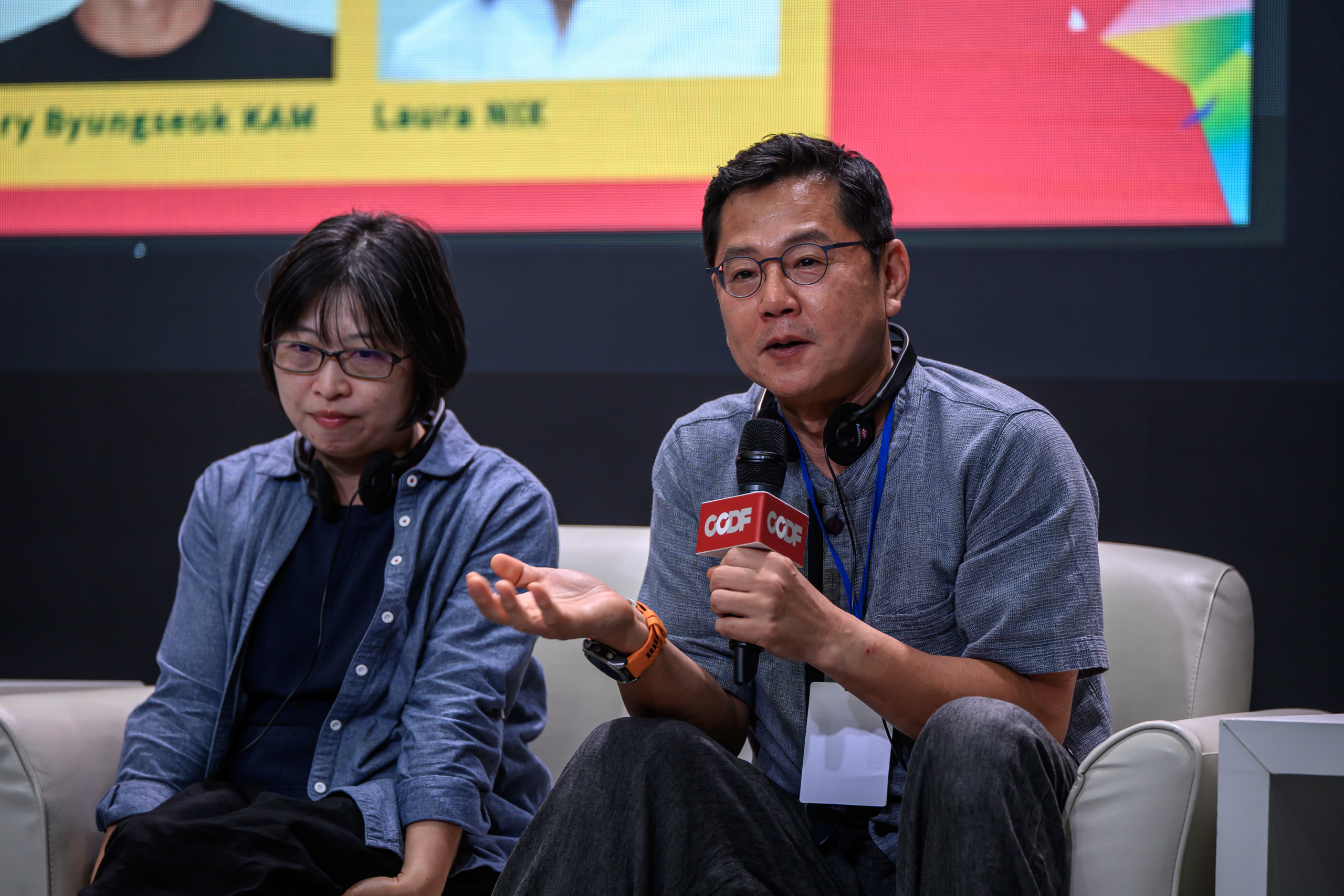
Producer and director Huang Hui-cheng addressed the situation from Taiwan’s perspective. She acknowledged that Taiwan benefits from a relatively stable and institutionalized government funding system compared with many Asian countries. However, she argued that the core challenge lies not in the availability of resources, but in how they are allocated and used.
1. Resource Allocation and Effectiveness
Huang noted that the Ministry of Culture allocates substantial annual budgets to documentary production grants, theoretically supporting diversity and creative innovation. In practice, however, she observed that a significant portion of funding is repeatedly awarded to the same broadcasters or production entities.
Some projects, she pointed out, complete production and administrative clearance without meaningful distribution or outreach, limiting the public impact of these resources. She expressed hope that funding mechanisms could better support innovative, high-quality documentaries rather than primarily fulfilling procedural requirements.
2. Geopolitical Visibility Requires Active Engagement
Huang also highlighted that geopolitical developments over the past two years have increased European and international festival interest in Taiwan, generating unprecedented visibility.
She cautioned, however, that such attention does not automatically translate into long-term outcomes. Taiwanese filmmakers must proactively engage internationally and build sustained relationships in order to convert short-term geopolitical interest into lasting industry positioning.
3. A Structural Shortage of Producers
At the industry level, Huang identified a chronic shortage of professional producers in Taiwan. Many practitioners aspire to direct, while fewer are willing to take on producing roles, resulting in a structural talent gap.
She shared that her own entry into producing stemmed from the inability to find suitable producers—an adaptive response to systemic limitations rather than an ideal career path. This, she argued, reflects the need for stronger professional specialization within Taiwan’s documentary ecosystem.

Repositioning the Director in a Changing Market
Director Violet Du Feng, who has remained active on the international festival circuit, spoke from personal experience about redefining the director’s role amid rapid market shifts.
1. Transforming Production Models
Feng noted that the traditional independent documentary pathway—festival premiere, festival circulation, distributor acquisition—is no longer reliable. Even selection by major festivals no longer guarantees sales. She cited recent Sundance editions, in which films were selected, but few secured distribution deals.
As a result, marketing and distribution responsibilities are increasingly shifted onto directors themselves. Despite the intensive demands of production, filmmakers are often expected to devote substantial time and budget to self-promotion. While not ideal, Feng described this as an unavoidable reality.
2. Building Long-Term Support Networks
In response, Feng has begun rethinking funding structures by cultivating long-term relationships with private supporters across projects, rather than restarting fundraising from zero for each film. She argued that creator-centered support networks offer greater sustainability in uncertain environments.
3. Returning to Creative Core
Feng also echoed concerns about platform disinterest in politically sensitive content, including films focused on China. Rather than chasing shifting market preferences, she emphasized the importance of returning to one’s creative core, prioritizing what must be said in the present moment.
Her reflections underscored a broader repositioning of the director’s role: from executing projects to navigating uncertainty while maintaining creative integrity.
The Crisis of Documentary Distribution
From Completion to Visibility
Laura Nix returned to address what she described as the central crisis facing documentary filmmakers today: not whether films can be made, but whether they have anywhere to go once completed. As traditional distribution channels and public platforms shrink, many films are left without buyers or circulation pathways.
This breakdown has directly affected funding structures, prompting private donors and investors to withdraw support when returns become unlikely, further constraining filmmakers’ survival.
The Reality of Self-Distribution
Nix noted the emergence of independent platforms such as Jolt and Kinema, which allow filmmakers to host their work but do not actively build audiences. As a result, “self-distribution” increasingly means self-marketing and long-term audience cultivation, skills unfamiliar to many documentary practitioners.
She emphasized that this model tends to favor advocacy-oriented films with clear calls to action, while more cinematic or art-driven works often struggle.
Compounding the issue, most funding institutions continue to restrict budgets to production alone, excluding marketing, distribution, and even festival travel. This disconnect reflects outdated assumptions about how films reach audiences today.
Nix also discussed the growing role of PMDs (Producers of Marketing and Distribution), specialists who focus on audience outreach and strategy. While highly valuable, these roles are often unaffordable, leaving filmmakers to absorb the responsibility themselves.
In her view, the industry’s core challenge is no longer funding alone, but whether its structures and mindsets have adapted to the realities of post-completion work.

New Technologies and Media Practices
When discussing AI, short-form video, and emerging tools, speakers emphasized pragmatic and ethical considerations rather than technological optimism.
Nix described using AI voice alteration to protect participants and AI-generated imagery to support storytelling, while stressing the importance of anticipating ethical implications ahead of market adoption. She also shared her first attempt at releasing interview excerpts as short-form videos on YouTube to broaden access points for audiences.
Gary Kam cautioned against ignoring the environmental costs of AI, including significant energy and water consumption, urging creators to remain critical rather than blindly pursuing innovation.
In response, moderator S. Leo Chiang noted that while media formats constantly evolve, filmmakers need not abandon long-form cinema, but should remain open rather than defensive toward new forms.
What Does Success Mean Today?
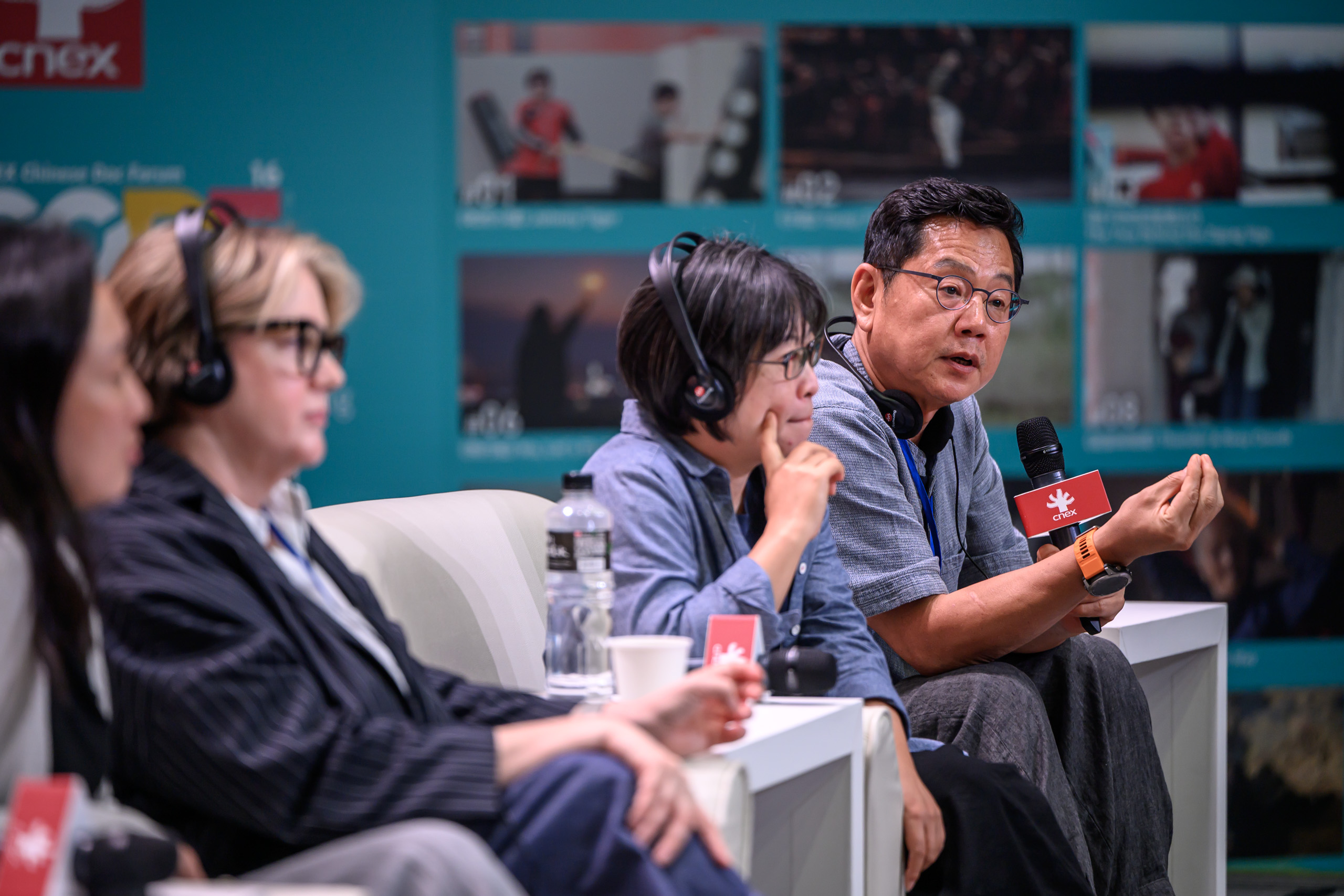
In closing, the moderator posed a final question: What does success mean in this era? The responses made clear that “success” is no longer a single destination, but a set of evolving practices shaped by uncertainty, responsibility, and the conditions that allow work to continue.
For Gary Kam, success begins with endurance. In a field where thousands of documentaries are completed each year and only a small fraction find strong circulation, he argued that there is no guaranteed route forward. What matters is refusing to stop, continuing to move, to adapt, and to keep making work even when outcomes cannot be predicted.
Huang Hui-cheng expanded the definition further, suggesting that success cannot be measured only by the completion of a film. It also includes the long, often invisible labor of improving the ecosystem itself, pushing for institutional changes that make it more possible for the next generation of creators to develop and sustain projects.
Laura Nix brought the question back to first principles: success is the ability to speak honestly about what one truly cares about, without fear of censorship or retaliation. In her view, it also depends on whether filmmakers can build a healthier industry culture—one grounded in collective organization and mutual support rather than isolation.
Violet Feng closed by echoing a sentiment she attributed to Kam: even if filmmakers do not achieve conventional markers of success, it still matters to create pathways for those who come after. In that framing, success is not only personal achievement, but a commitment to leaving the ground slightly more navigable than one found it.

Conclusion
This panel revealed a global documentary industry undergoing a profound structural transformation. From the erosion of public funding and consolidation of commercial platforms to fractured distribution systems and shifting technological landscapes, the foundations of documentary practice are being redefined.
Yet amid these challenges, the four speakers demonstrated resilience, adaptability, and a commitment to collective support. Rather than offering a single solution, they articulated ways of continuing to work, collaborate, and create space for future generations in uncertain times.
Ultimately, the discussion pointed not toward a fixed model of success, but toward an ongoing question: how to move forward—together—when the ground beneath the industry is still shifting.