Translating Culture Through Documentary
Ema Ryan Yamazaki’s Masterclass
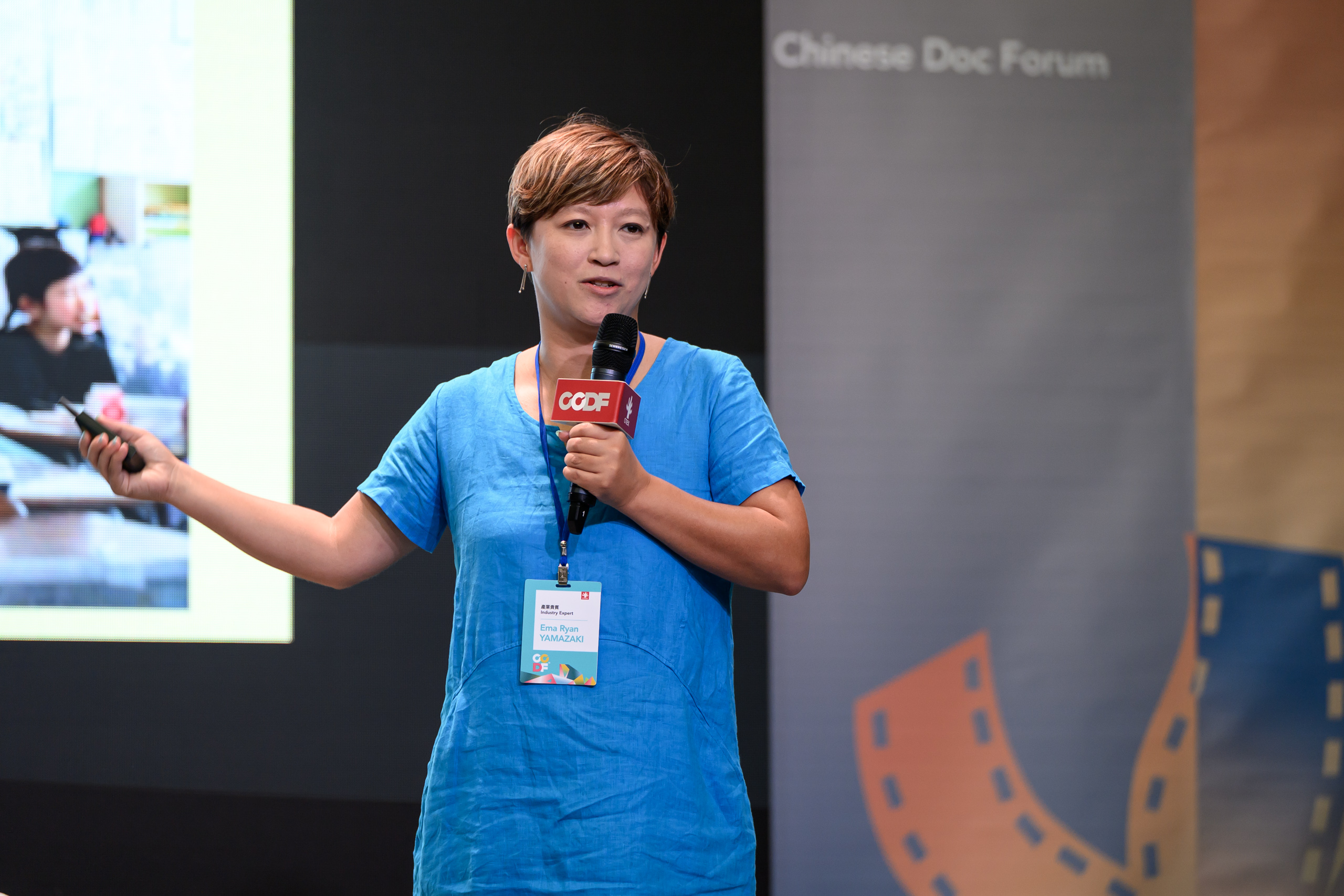
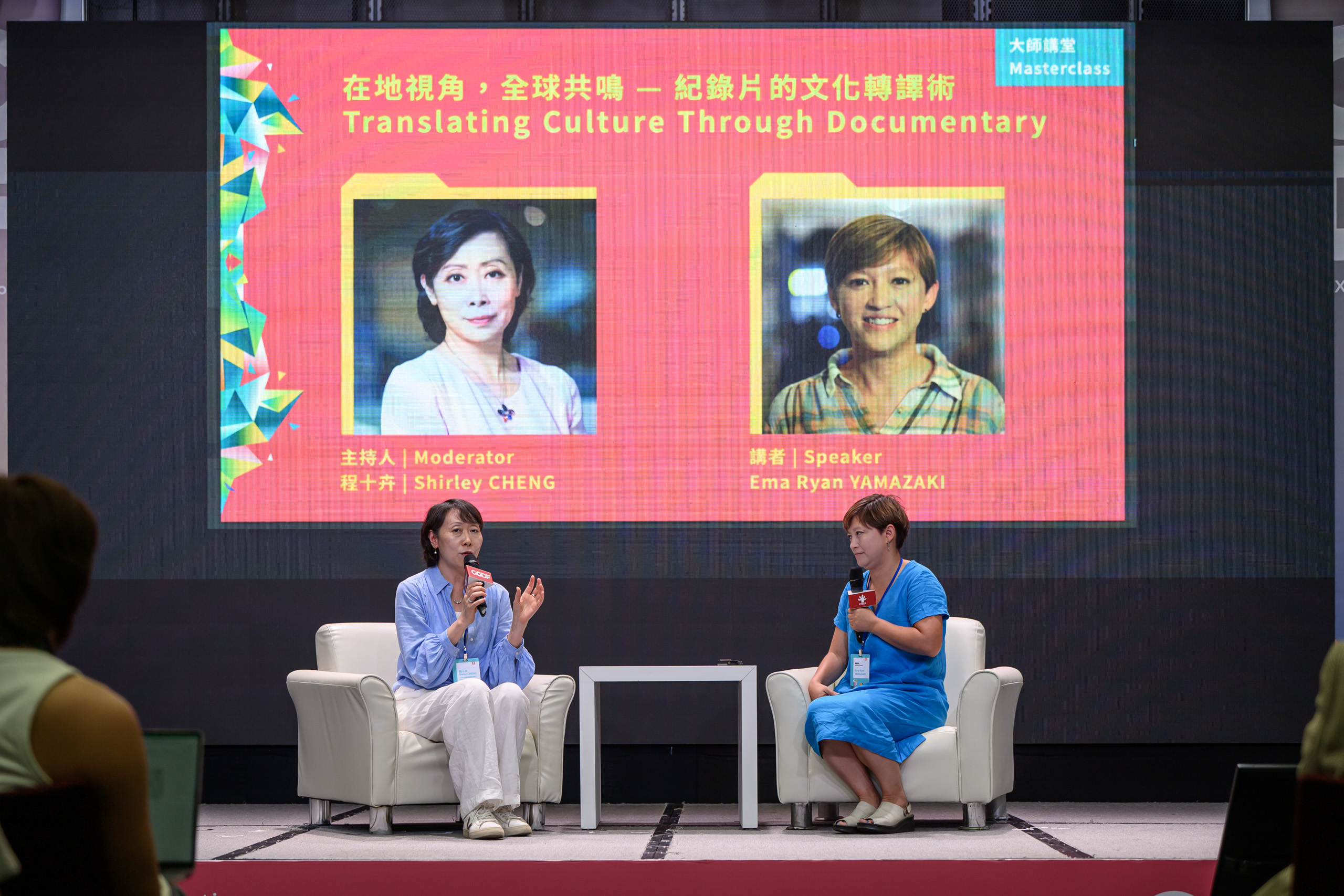
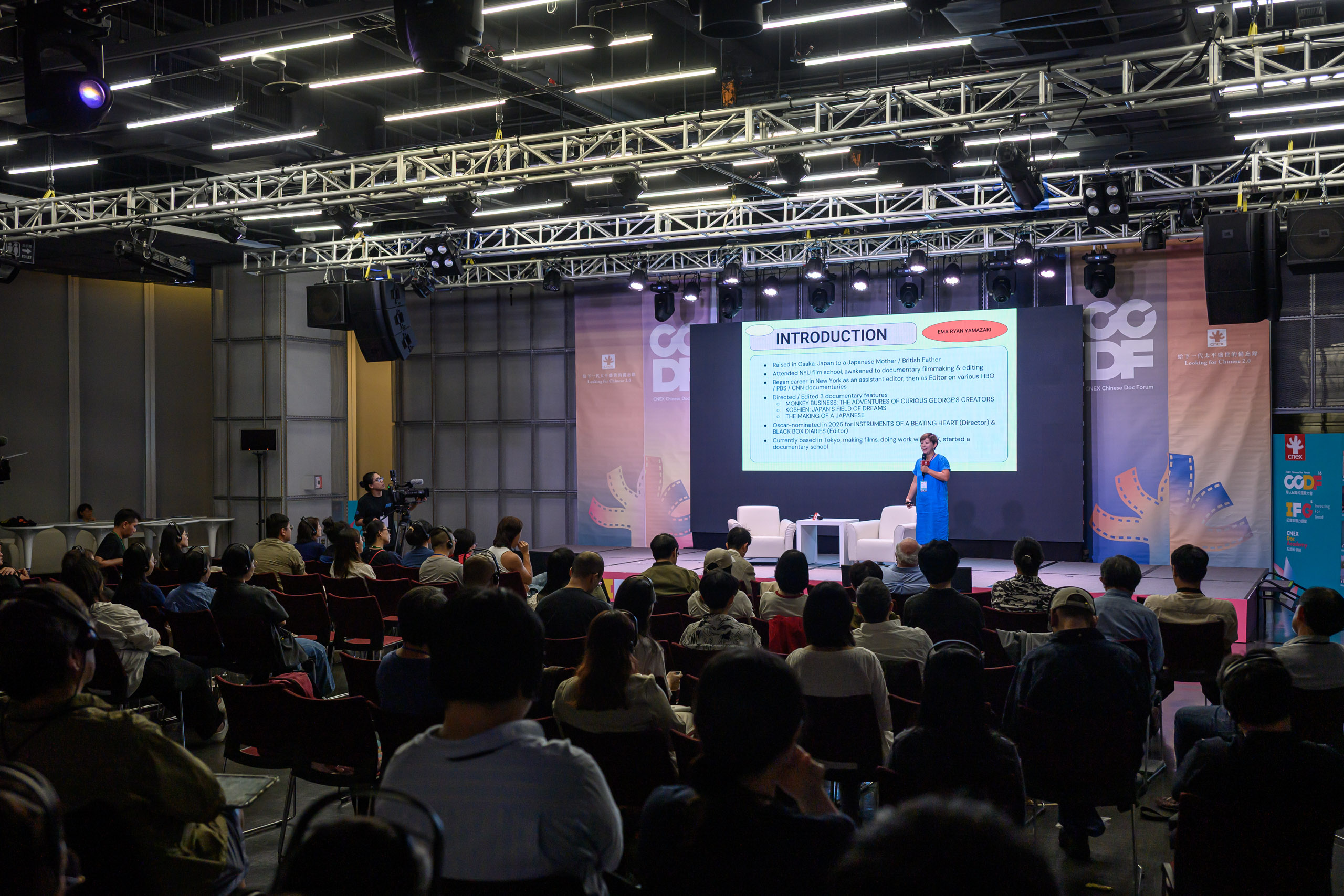
Japanese documentary filmmaker and editor Ema Yamazaki, whose short film Instruments of a Beating Heart was nominated for the Academy Awards in 2025, shared her creative journey at the CCDF Masterclass, offering an in-depth reflection on documentary as a form of “cultural translation.”
Using her feature documentary The Making of a Japanese as a central case study, Yamazaki demonstrated how long-term observational filmmaking can reveal social values embedded within everyday systems, particularly the education system.
Living Between Cultures
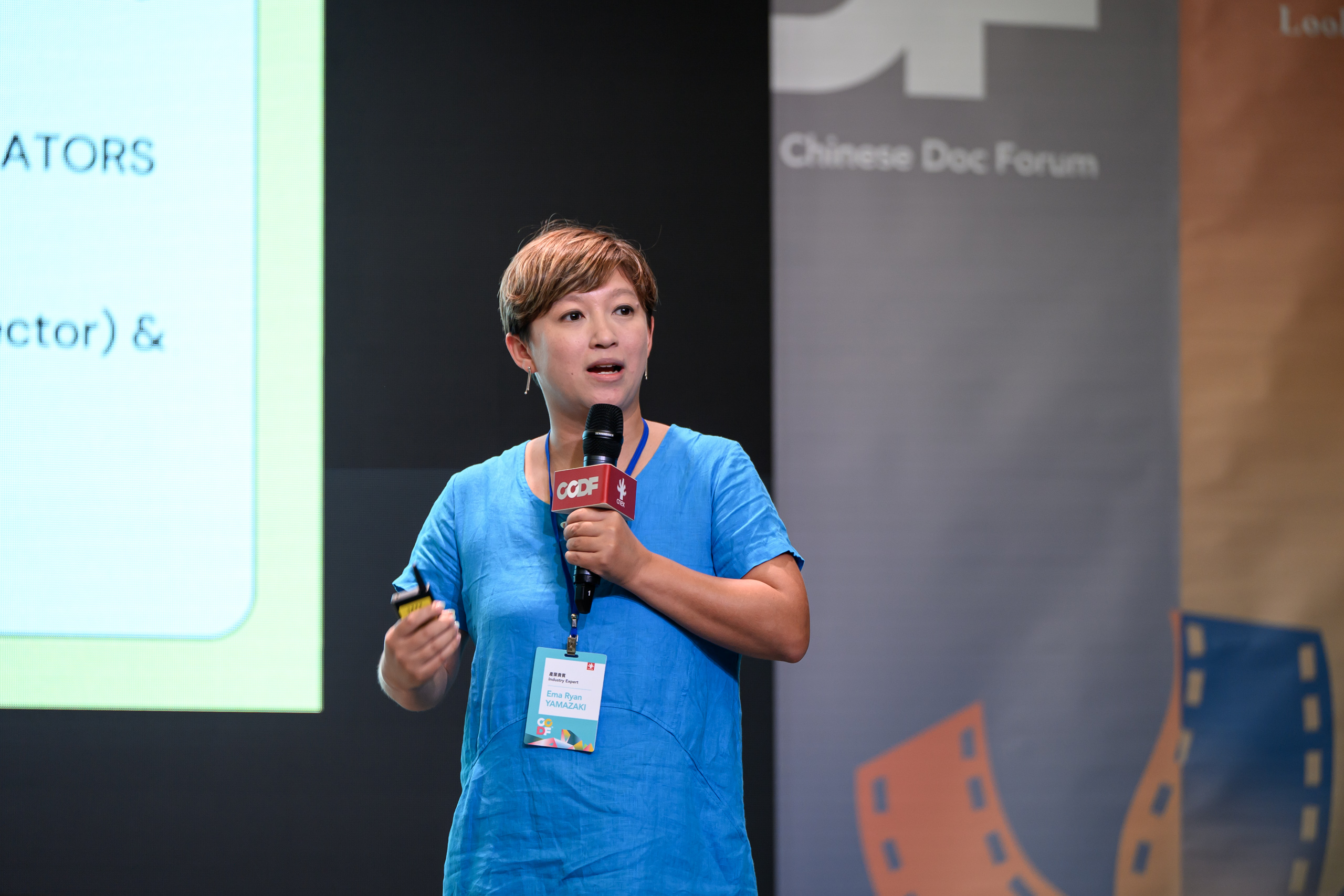
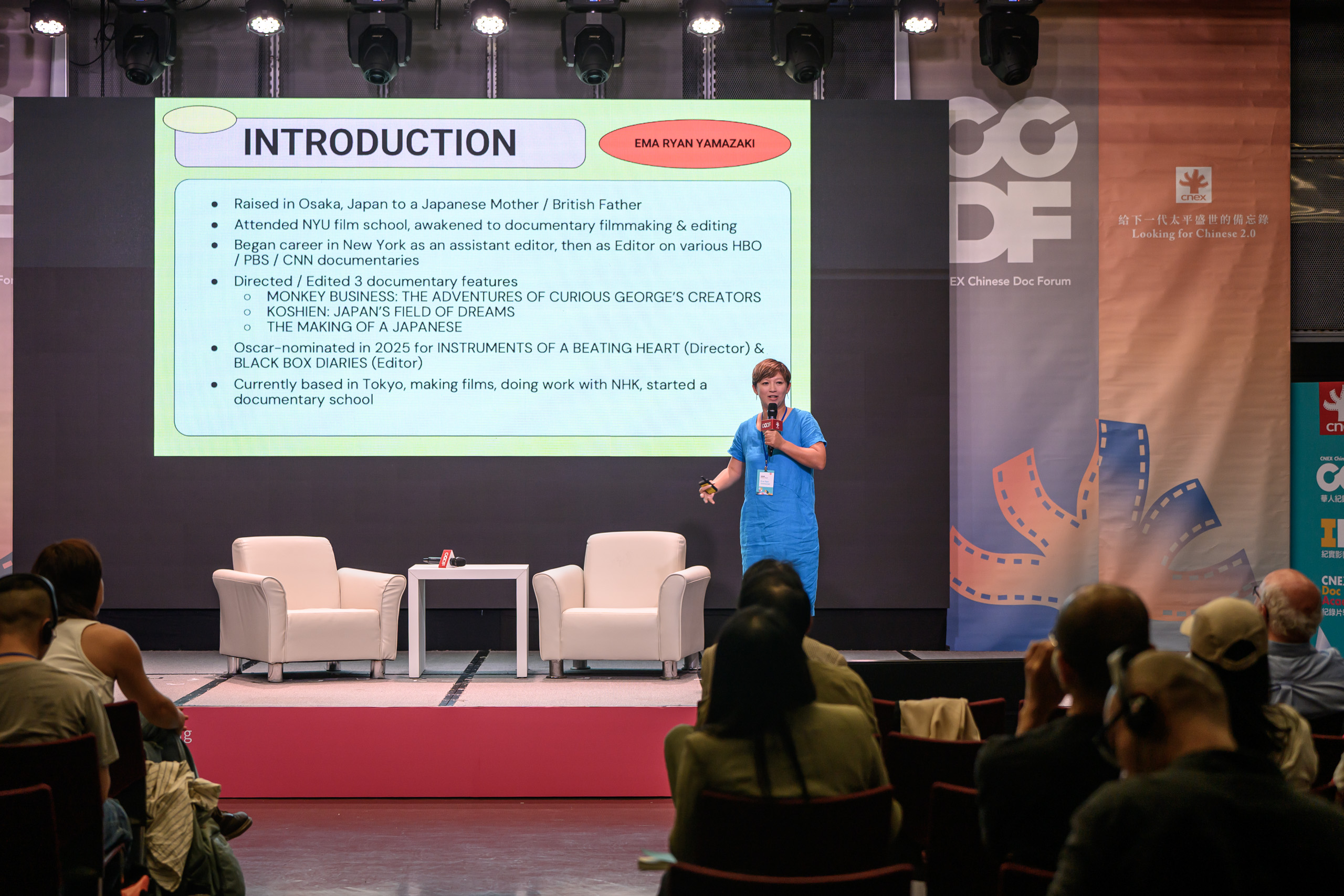
Born and raised in Osaka to a British father, Yamazaki grew up navigating between Japanese and Western cultures. She has described herself as someone who has been “translating culture” her entire life, an experience that ultimately became the foundation of her documentary perspective.
At the age of 19, she moved to New York to attend NYU Film School. At that time, she did not yet intend to become a documentary filmmaker. However, she quickly realised that she was far more interested in observing the real world than in creating fictional narratives. Documentary allowed her to reorganise reality through her own perspective and generate meaning from lived experience.
She began her career as an editor, training under Sam Pollard and observing the documentary filmmaking techniques of professionals like Ken Burns. Through years of practice, she gradually developed a firm belief that editing is the narrative engine of documentary filmmaking. As she explained, “Some people are good at creating one from zero, and other people are good at making that one into ten, or the best version of it, and I quickly realised I was the latter.”
A Ten-Year Filmmaking Journey
Living abroad for extended periods made Yamazaki increasingly aware that international perceptions of Japan often focus on cuisine, craftsmanship, pop culture, or traditional imagery, while rarely addressing the internal systems that shape social behaviour.
In her view, Japan’s education system offered a crucial point of entry. Japanese elementary schools do more than teach academic subjects; through cleaning classrooms, serving lunch, participating in collective rituals, and engaging in group activities, children learn responsibility, cooperation, and discipline.
Reflecting on her own upbringing, Yamazaki came to believe that to understand both the strengths and contradictions of contemporary Japanese society, education is an essential starting point.
The Making of a Japanese began in 2014 and took nearly ten years from conception to completion. Yamazaki visited approximately 30 schools before finally securing permission to film one public elementary school in Tokyo, where she was allowed to document an entire academic year.
The greatest challenge was earning trust. Japanese schools are extremely cautious about external filming, especially when there is no precedent. Ultimately, Yamazaki positioned the project within the international context of the Tokyo Olympics, framing it as a cultural observation for global audiences rather than a promotional film. This approach helped persuade local governments and educational authorities.
On the production side, the project was co-produced with NHK, which provided a dedicated cinematographer and equipment over an extended period, enabling long-term, immersive observation.
An Observational Filmmaking Approach
Filming spanned an entire school year. Yamazaki was present on campus for approximately 150 school days and accumulated more than 700 hours of footage. Including research and post-production, she estimates that she spent nearly 4,000 hours embedded within the school community.
During production, she walked roughly 30,000 steps a day through hallways and classrooms, searching for fleeting but revealing moments of everyday truth. The team used a small, easily overlooked camera, deliberately minimising its presence so that children and teachers could return to their natural rhythms.
Sound was equally critical. Wireless microphones placed on teachers’ desks quietly present, almost like protective charms, ensuring that subtle conversations and emotions are preserved. Although this approach is uncommon in Japanese documentary practice, Yamazaki insisted on using five to ten microphones during each shoot, because, as she stated, “if you don’t hear it, you don’t understand what’s happening.”
She described the experience succinctly: “Every day felt like going to school.” It was not a one-off shoot, but a long-term process of living alongside the school, allowing genuine moments to emerge through repetition and time.
Yamazaki also explained the invisible labour behind the film: building trust with children, conducting months of preliminary visits to upper-grade classrooms, and deliberately choosing to begin filming on the very first day of first grade so that the camera could naturally become part of the children’s world rather than a disruption.
“Of course, the children wave at you at first,” she said. “But eventually, they forget that you are there. And that is when the real moments begin to appear.”
COVID, Motherhood, and Reality
Filming took place during the COVID-19 pandemic. The crew conducted weekly testing and worked fully masked, which posed challenges for capturing emotional nuance. In retrospect, Yamazaki also recognised that masks offered a form of protection, reducing the recognizability of the children and creating a necessary layer of distance as the film circulated over time.
During post-production, she was pregnant and completed the edit while preparing for childbirth, delivering the first cut to NHK within six weeks after giving birth. She emphasised that this was not a replicable model, but rather a reflection of the reality that documentary filmmaking is inseparable from life itself—creation does not pause life; it unfolds within it.
Editing as a Process of Understanding
Editing began during production. Yamazaki and her co-editor developed a multi-layered selection system, holding regular review sessions and gradually shaping countless hours of footage into an emotionally coherent narrative. Some lines were re-recorded for clarity, while missing transitional scenes were filmed months later.
“To some extent, it was like making a fiction film,” she said, describing how she returned to the location to complete emotional arcs. However, she stressed that this process did not make the film less truthful.
Because the film follows a collective rather than individual protagonists, the editorial focus was on balance between different age groups, teachers, emotional tones, and rituals. Editing, she emphasised, is not merely organising material, but repeatedly clarifying what the film is truly about.
Test Screenings and a Difficult Release Period
Throughout the Masterclass, Yamazaki repeatedly highlighted the importance of test screenings. Each feature film, she shared, typically undergoes dozens of screenings with feedback from over a hundred viewers. She admitted that conflicting feedback once made her cry and forced her to learn how to filter opinions—when to open the film to others and when to close the door and return to her own instincts.
“You have to figure out how to continue to believe in yourself,” she said. “Because that is hard, especially when you don’t get the recognition.”
After the film was completed, its release did not come easily. Between late 2022 and early 2023, Yamazaki submitted the feature to major international festivals, but it was not selected.
She noted that this period is often overlooked in retrospect. From today’s perspective, her trajectory may appear swift and successful, but at the time, the film felt stuck—unseen, with no clear path forward.
This stagnation followed years of intense personal and creative investment, including pregnancy and early motherhood. For the first time in her career, she seriously questioned whether she should continue making documentaries.
Looking back, she concluded that the films themselves had not changed, they simply needed time to be seen.
International Circulation and Return to Japan
To reach different audiences, The Making of a Japanese was edited into multiple versions for theatrical, television, and digital platforms. Yamazaki chose to begin with international circulation before returning to Japan, anticipating local hesitation toward a film about everyday education.
The strategy proved effective. The film screened in over 30 countries, and its Japanese theatrical release expanded from an initial 13 theaters to more than 100. The companion short, Instruments of a Beating a Heart became one of the most-watched works in the history of The New York Times Op-Docs and received an Academy Award nomination.
Ethical Responsibility When Filming Children
Working with minors prompted ongoing ethical reflection. Yamazaki chose not to fully disclose children’s names and maintained long-term relationships with participating families. She emphasised that legal consent does not absolve filmmakers of responsibility, especially as children may feel differently about their images as they grow older.
She has expressed concern about how the children might view the film in the future and makes efforts to give back to them—one participant even attended the Oscars as her guest. If any of the children were to request the removal of footage upon reaching adulthood, she stated she would comply without hesitation.
“Having a release form doesn’t really mean anything,” she said. “What matters is character.”
A Message to Filmmakers
Yamazaki hopes to expand global narratives about Japan beyond stereotypes of stoic office workers, revealing instead the emotional texture of everyday classrooms where social patterns quietly take shape. She expressed her hope that Japan might experience a new documentary wave similar to recent developments in India and South Korea.
The “tools” she referred to were not equipment, but storytelling methods—tools she believes Japanese filmmakers should have access to and be free to use.
In closing, she reflected on the period when her work remained unseen. Ultimately, she realised that the films did not need to change; they simply needed time.
Her message to filmmakers was clear:
“Don’t doubt yourself. The world needs your perspective—it just sometimes takes longer to be seen.”